
Group planning
How to Plan a Galveston Steakhouse Group Dinner
A planning note for the evening.
A practical independent-guide framework for choosing the pace, priorities, and confirmation steps that keep a Galveston group dinner focused on the people at the table.
The Ninth Floor is a personal dining guide. It is not the official website of Shearn’s Seafood & Prime Steaks, Moody Gardens, Resy, or any other business referenced here. Our recommendations reflect personal local perspective for people looking for a special Galveston dining suggestion.
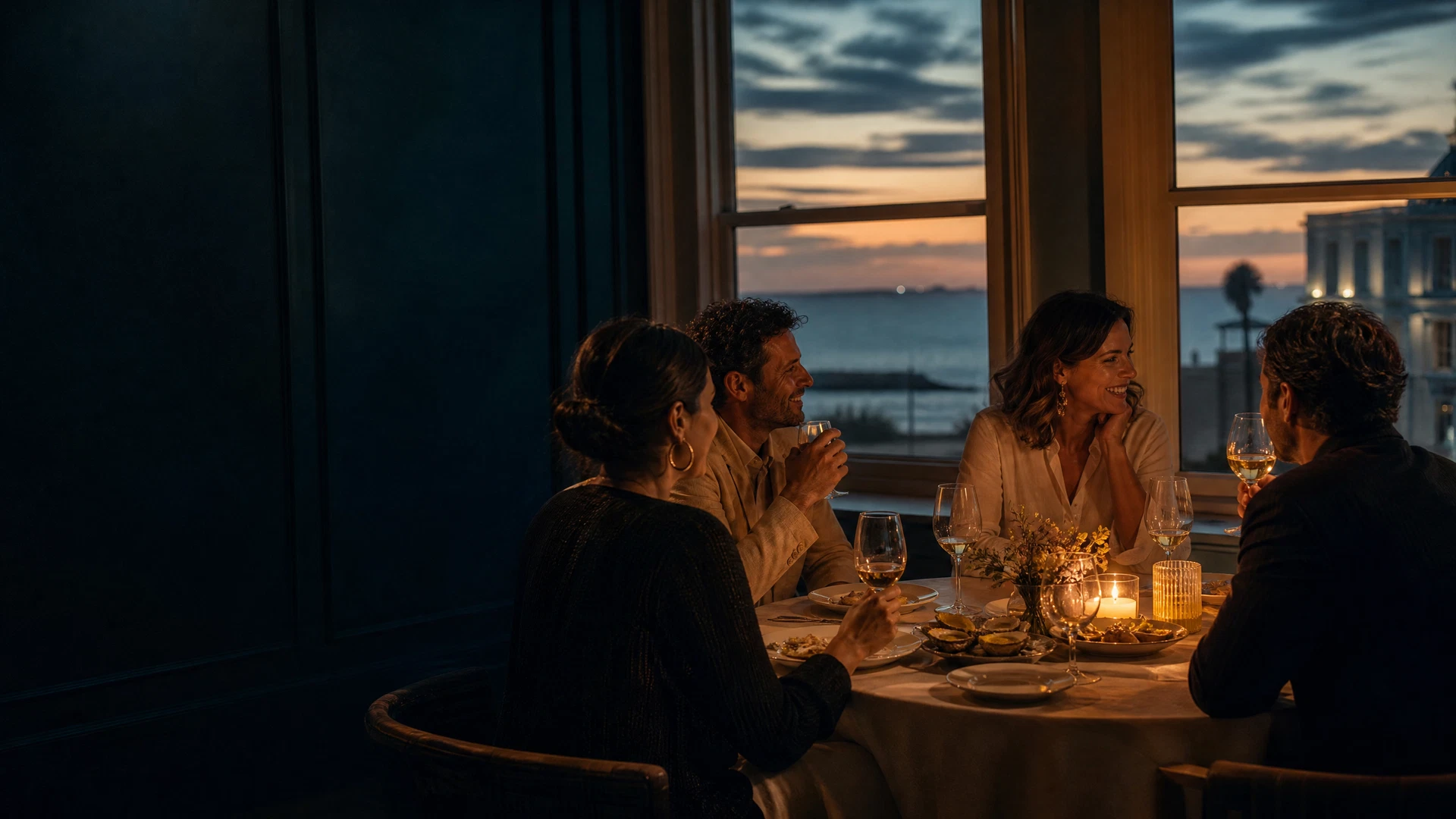
A thoughtful Galveston steakhouse group dinner begins with a shared picture of the evening, not a long list of venues. Agree on who is coming, whether the gathering marks a milestone or a visit, and how much time the group wants for conversation around the meal. Collect any essential timing, dietary, or accessibility questions and confirm party arrangements and current availability directly with the restaurant’s official source before committing to a reservation. Then share the confirmed plan with the guests and leave a little margin for arrivals, so dinner feels like time together rather than an agenda.
Start with the group, not the venue list
Begin by naming what the group needs from the evening. A birthday, a reunion, a work-adjacent dinner, and a family visit may all benefit from a different pace, even when everyone is interested in the same kind of meal. That clarity gives the planning process a human center before the practical questions arrive.
Consider the range of expectations around the table without trying to satisfy every preference through one perfect choice. Some guests may value a view, others may care most about conversation, and someone may simply need the evening to feel easy to join. A useful plan makes space for those differences rather than treating them as a problem to solve.
The guide can help organize that first conversation, but it cannot decide current restaurant fit on the group’s behalf. Keep the early comparison broad and personal, then move changeable details to the official source. That distinction makes the plan more dependable for everyone involved.
Give the evening a shared shape
A group dinner usually feels more settled when there is a simple shared shape to the night. Decide whether people should arrive at the same time, whether there is room for conversation before the meal, and whether the dinner is the main event or part of a longer Galveston evening. Those choices matter more than building an overly detailed itinerary.
For a celebration, choose one modest point of focus that everyone can understand, such as a toast, a shared opening course, or time to linger after dinner. Keeping the center simple lets individual conversations develop naturally. It also avoids asking the restaurant to carry expectations that belong with the hosts and guests.
Leave a little margin around the reservation so a late arrival or a longer conversation does not disrupt the tone. A well-paced plan is more forgiving than a tightly packed one. The people at the table will remember the ease of the evening more than the precision of the schedule.
Keep live details with the official source
Group size, reservation availability, seating requests, accessibility needs, menu selections, and special policies can all change. Those details belong with the restaurant’s current official information rather than an editorial planning note. Confirm them directly before the group settles on a plan.
A concise message or call with the specific question that matters to your table can be more useful than another round of general research. Ask about the current detail that affects the group’s decision, then let the official response guide the final choice. This approach is both more practical and more respectful of the restaurant’s own operations.
The Ninth Floor remains an independent resource, not a booking desk or restaurant operator. Its role is to make the planning conversation clearer while keeping current operational facts with their primary source. That separation protects the usefulness of the guide over time.
Make the last step simple
Before the evening, confirm only what will meaningfully change the experience: the date, the party, any essential needs, and the official reservation details. Everything else can remain open enough for the dinner to feel like a gathering rather than an agenda. A short final check is often the most useful group-planning tool.
If the group is choosing between a steak-centered meal and other options, review the current menu directly instead of relying on a past description. That keeps individual preferences connected to current information. It also makes room for guests to make their own choice once the shared setting is decided.
Use this guide as a starting perspective, then return to the wider site when the group needs a clearer way to frame the evening. The best plan is the one that helps everyone arrive ready to be present.
Return to the Galveston steakhouse group dinner when you want a broader independent perspective before using an official source to confirm current details.
Keep the handoff clear
The Ninth Floor is an independent planning resource, not a restaurant operator or reservation desk. For current availability, menus, prices, accessibility needs, and special requests, use the official restaurant source before making plans.